




Colorism in business; Each color, by conveying different emotions and messages, is effective in people’s decisions in a way; Therefore, it can be said that colors play an important role in creating a brand’s identity and attracting customers to it. Nevertheless, understanding the principles of color and using it intelligently in business and branding can create a distinctive brand for you and gain the trust of customers.
In this article, we will examine the key concepts of color theory in business and how to use colors correctly so that you can finally experience the best choice for creating an effective brand by mastering the personality of colors.
What is the concept of color?
The visual perception resulting from the stimulation of photoreceptor cells, i.e. cone-shaped cells in the eyes of humans and other animals, which is caused by electromagnetic radiation, is called color. For this reason, the difference in interest in colors and their different effects depends partly on the light energy; Of course, another factor that affects negs and the variety of creating a behavioral sense of them in people is human visual habits.
For example, because nature is green, we associate green color with nature and purity. Color is also defined as a visual element in branding and marketing; Because the light reflection in the colors can depend on the physical characteristics of the products such as light absorption and their color spectrums; Therefore, knowing about color in business helps to strengthen the brand and attract customers.
The place of color in the mind and vision
The mechanisms of color vision at the retinal level are well described in terms of three-dimensional quantities; But the color processing afterwards is organized differently. A dominant theory in color vision proposes that color information is transmitted from the eye through three opposing processes or channels (in the human brain), each constructed from the output of cones (retinal cells).
Visual channels
- Red-green channel
- Yellow-blue channel
- Black and white channel (luminance)
The importance of color in business
In marketing, colors are one of the main tools to attract customer attention and convey the brand message; Because among the different human senses, sight has the most impact on decisions and each color is able to convey a specific message. By looking at the colors, people can get an initial impression of the product and even remember a brand.
But in the meantime, choosing the right color combination can convey the brand’s message in a positive and effective way and, in addition to attracting the audience, establish a stronger emotional connection with them and lead to the success of the brand and increase in sales.
How should the choice of color in business be?
Colorology in business is a complex process that, in addition to paying attention to the concepts of colors, requires understanding more subtle points. The choice of color should be done in such a way that it matches well with the brand identity and the needs of the market and affects the emotions and behavior of customers;
The use of complementary colors is recommended to attract attention, while overdoing these color combinations can increase visual clutter; Also, adjacent colors such as yellow and orange lead to the feeling of energy. It is better to choose colors according to the seasons of the year, that is, bright and happy colors are suitable for spring and dark colors are suitable for cold days of the year.
Another point that is important in using colors for business is paying attention to the different meanings of colors in different cultures. For example, while white color can show purity and purity, it is used for mourning in some countries. Nevertheless, the choice of color should match the culture and emotions of the audience and somehow remind them of your brand.
Examining the effect of organizational color on branding
The choice of organizational color goes beyond aesthetic aspects; Because every color subconsciously conveys a message to the customer. For example, the color yellow, which is known by the Irancell brand, will evoke a sense of optimism and energy in the audience’s mind. In a way, the power of color can differentiate a brand from competitors and establish a deep emotional connection with the audience.
On the other hand, the wrong choice of color can harm the brand and have a negative impact on the perception of the audience. For this reason, big brands carefully choose colors that send consistent and strong messages to their audience and make them memorable. Based on the principles of color science, choosing an organizational color should be done carefully and based on the brand’s field of activity.
For example, in the food and feed industry, red and orange colors stimulate appetite; Meanwhile, in brands related to organic products, green and white colors are used due to inspiration from nature and inducing a sense of freshness.
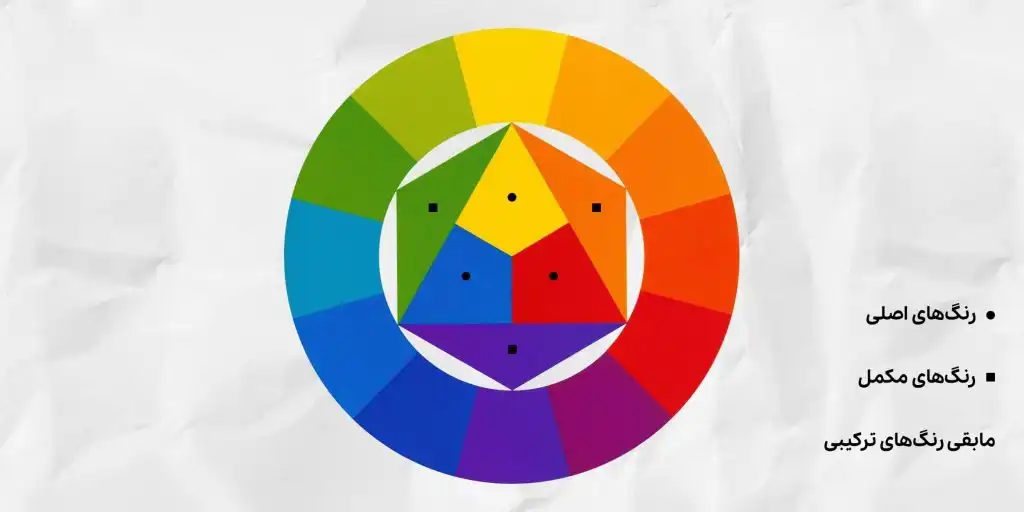
All kinds of colors
The color cycle is generally divided into two categories (cold and warm); But in terms of hierarchy for colors, there are generally 3 categories:
- Primary colors (red, blue, yellow)
- Complementary or secondary colors (green, orange, purple)
- Mixed colors (green, blue, purple, pink)
warm colors
In the color wheel, warm colors include green, yellow, orange, red, pink and purple. Among the strong points of these colors, we can mention their emotional and uplifting character; Of course, sometimes they may also be accompanied by a sense of violence or hatred.
Cold colors
Cool colors include purple, blue, turquoise, blue-green. These colors inspire peace and comfort to the audience; However, they have less visual strength compared to warm colors.
Note: Purple is a two-sided color, that is, it can be used both as a warm color next to warm colors and as a cold color next to cold colors.
Color psychology
The effect of a concept on the understanding and mental feelings of a person, by colors, is called color psychology. In fact, color can become an effective element in a person’s behavior. For example, imagine that a Coca-Cola can was green instead of red; In this case, probably fewer people would be attracted to it, and maybe even if attracted, a sense of duality would be induced in the audience.
If the goal of Coca-Cola was to supply organic products, green and blue colors would be the best options. But since Coca-Cola is a sugary drink and cocaine is added to it during production, these colors are not suitable for this drink.
Of course, the type of influence of colors on people is different depending on various factors such as age, gender, culture and place of residence. For example, some people see black as a symbol of sadness; while for others this color is a symbol of charm and power.
Characteristics of colors
The psychological characteristics of colors have a significant impact on Branding and marketing products or services; Because the wrong choice of organizational color can have negative effects on the mind and spirit of customers and destroy the sense of trust, which will lead to the failure of businesses, it may even inspire a wrong image of the type of product to the customer. For this reason, color science is considered as a vital element of business.
You may ask, how is this possible? In fact, the color in your brand and logo is a kind of reflection of your business personality, both in terms of services and in providing goods. For example, the dark green color in the Starbucks logo creates a state of positive mental attitude and because it is the natural color of plants, it conveys a feeling of freshness to the viewer.
Personality of colors
Colors have three independently variable visual dimensions:
- Fam (which specifies the position of the color in the color series (color cycle) with the equivalent of different wavelengths of light in the visible spectrum.)
- Luminosity (determines the relative degree of darkness and lightness of the color.)
- Saturation (which determines the purity of color in nature.)
According to these dimensions, one can somehow understand the character and meaning of colors, which is as follows.
white color
White color is the mother’s color, which is a sign of cleanliness, purity and the manifestation of innocence, that is why the wedding dress is white; Also, white is synonymous with peace and tranquility. Because this color reflects the light and is a summer color, it is considered a popular element in the fashion and decoration industry and it fits well with everything.
black color
Black is a symbol of dominance and power, at the same time it represents elegance and glory. People who like this color are often not looking for pretense. Although black color is sometimes known as a sign of sadness and mourning; But it is also a sign of good taste and good dressing.
green
Green represents nature and freshness and brings a feeling of freshness and peace. This color is mostly used to create a sense of trust and confidence in business and everyday life; because it subconsciously instills a sense of peace and security to the audience.
yellow
Yellow can be considered the strongest color in the color wheel; Because it attracts the most attention. This color, at the same time as indicating hatred or danger, can break this framework and create a sense of humor and optimism in the audience.
red
Excitement, love, excess and power are considered to be characteristic features of red color. This color increases the heart rate and strengthens the sense of energy and movement. For this reason, it is used in the food industry and restaurants to attract attention and create excitement in customers.
orange
If we liken the color orange to a human being, he is always friendly, cheerful, sociable and thoughtful, who avoids anger all the time.
pink
Among the characteristics of pink color, we can mention its dreaminess, calmness, tenderness, cheerfulness and gentle feelings. In the world of women and businesses related to them, this color has a special place.
purple
The most intelligent color in the cycle of colors is purple, which is considered both warm and cold at the same time; But it has a high standing and prestige and is a sign of power and wealth.
blue
Blue in any spectrum brings peace. This color indicates a kind of stability and perseverance, for this reason, large companies such as Ford, Volkswagen, Facebook and Gelavizh They use this color to show their strength and endurance.
gray
Gray may be considered a neutral color; But it indicates maturity, reason and intelligence. This color, because it is a color between white and black, has the quality of compromise and neutrality.

Color choice in business
Choosing the color for the organization, decor, packaging and even the logo is very important. In today’s highly competitive business world, one must make every effort to attract demanding customers and avoid competitors. One of the ways to attract customers is advertising; But it is not the only way, it is only one of the methods.
Colorism in life
Finally, we come to the conclusion that the influence of colors in today’s world is very bold; Because colors not only affect a person’s life and spirit, but also help to shape his personality and attitude. For example, the type of color scheme and clothing a person wears for a job interview can show a sense of intimacy and at the same time, his ability. The influence of colors in a person’s life is an undeniable issue; Because this matter has historical roots in all cultures and people are still looking to discover the secrets of colors.
Summary
Colors in business are not only a beauty tool, but also a determining factor in conveying the brand message, shaping the audience’s mentality and gaining the trust of customers. A proper understanding of color psychology helps the brand to create a lasting image, aligned with the culture of the audience and aligned with the organizational identity. Incorrect color selection may lead to misperception, reduced sales and failure in a competitive market.
Branding services Relying on the principles of color psychology and cultural analysis of the audience, Gelavizh company helps brands to create a precise, coherent and distinct visual identity. Gelavizh From a scientific and practical point of view, it turns the choice of organizational color into a tool for conveying the message and increasing the interaction of the audience.
Frequently asked questions
1. Why is color theory important in business?
Color science in business plays a key role in branding due to its direct impact on the minds and emotions of customers. Choosing the right corporate color can attract customers, increase trust in the brand, and strengthen the brand’s position in the audience’s mind.
2. How can the choice of organizational color affect the success of the brand?
Organizational color is not only an aesthetic element, but also conveys a psychological message to the audience. The right colors create an emotional connection with the customer and differentiate the brand from competitors. For example, the color red in food brands stimulates appetite.
3. What is the effect of colors in marketing and advertising?
In marketing, colors are effective tools to attract attention, stimulate emotions and convey brand messages. Smart use of colors in advertisements can increase the conversion rate and make the brand last in the audience’s mind.
4. How to choose the best brand color according to the business field?
To choose the best brand color, you should pay attention to the psychology of colors, the type of business, the behavior of the target customers and even the culture of the target market. For example, in the field of health and organic products, green and white colors are recommended, and in the field of technology, blue and gray colors are recommended.
5. What is the difference between warm and cold colors in branding?
Warm colors such as red, orange and yellow are energizing and exciting and are commonly used in the food industry, fashion and instant advertising. Cold colors such as blue, green and purple convey a sense of trust, calmness and stability and are suitable for financial, health and technology brands.
6. Does the psychology of colors really affect customer decision making?
Yes, color psychology plays an important role in the customer’s decision making process. Colors can create a sense of trust, excitement, calmness or power in the mind and affect buying emotions. Research has shown that up to 90% of a customer’s first impression of a product is based on its color.
7. How can the brand color stay in the customer’s mind?
Brand color stays in the audience’s mind when it is properly aligned with the brand’s message, personality and services. Consistent use of a specific color in the logo, packaging, website, and advertising increases brand awareness and creates a strong visual identity.
8. Can the wrong choice of color harm the brand?
Definitely yes. Choosing the wrong color not only conveys the wrong message to the customer, but can also cause confusion, decrease trust, and even decrease sales. For this reason, it is necessary to know the culture of the audience and psychological analysis of colors before choosing an organizational color.
